Game · A1
Intervals
Two notes, one interval. Major 3rd, Perfect 5th, Octave.
12 intervals Tap to hear M3
Train the skills between theory and performance: what you hear, recognize, read, and how you tune. Practice personally, or bring the same work into the classroom.
Choose any exercise and the page plays it. Same notes, same timing, same sound you'll work with in the app.
Two notes, one interval. Major 3rd, Perfect 5th, Octave.
A scale up and back down. Tell Major from Natural Minor. Dorian from Mixolydian. By sound, not by ledger lines.
Four notes in sequence, then together. Major, Minor, Diminished, Augmented, Dominant 7. The quality, not the root.
The same vocabulary · another sense
Intervals, scales, and chords return as reading games. The musical idea stays the same while the form of recognition changes.
A short view of personal practice, sight-reading, intonation, and classroom tools.
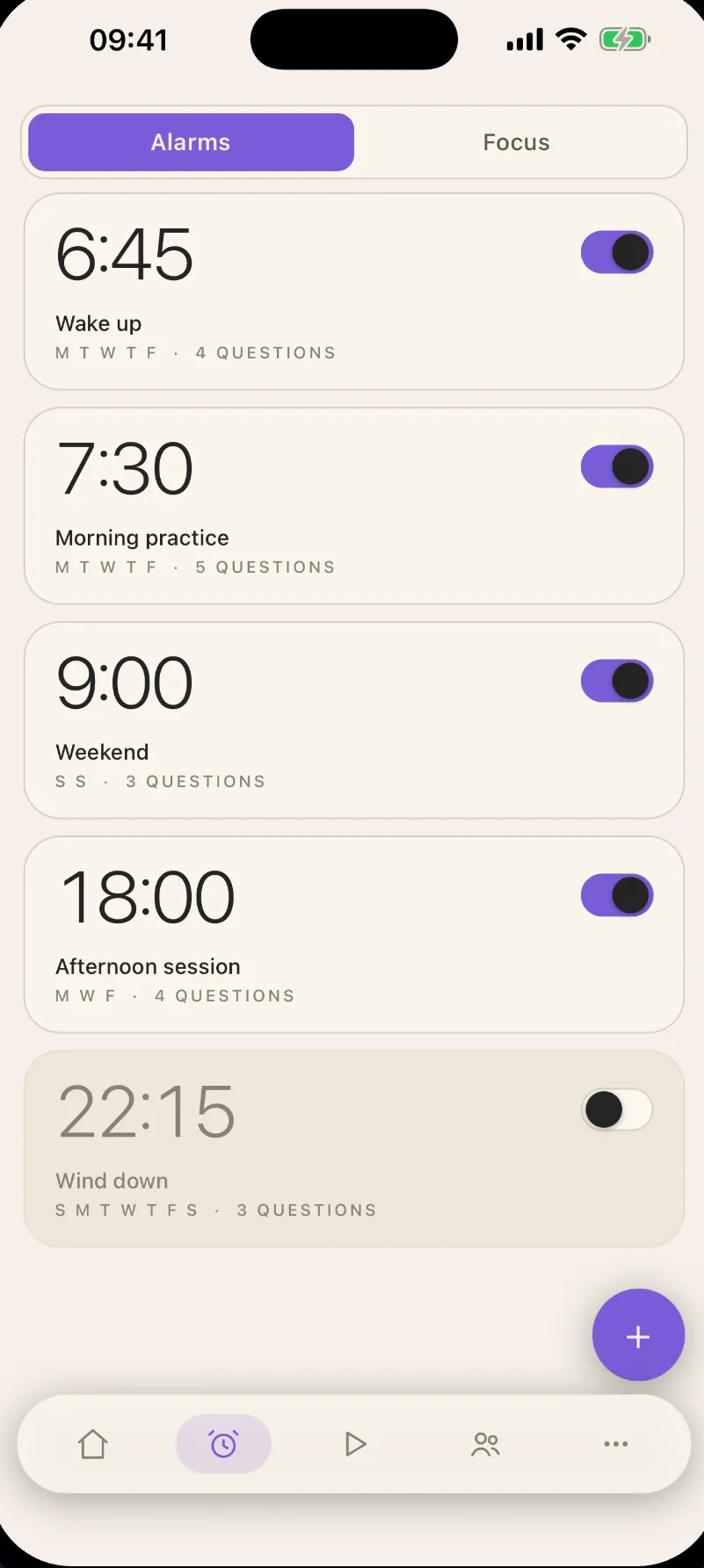
Practice, reading, theory, leagues, and classroom work on iPhone. Swipe through, light and dark.
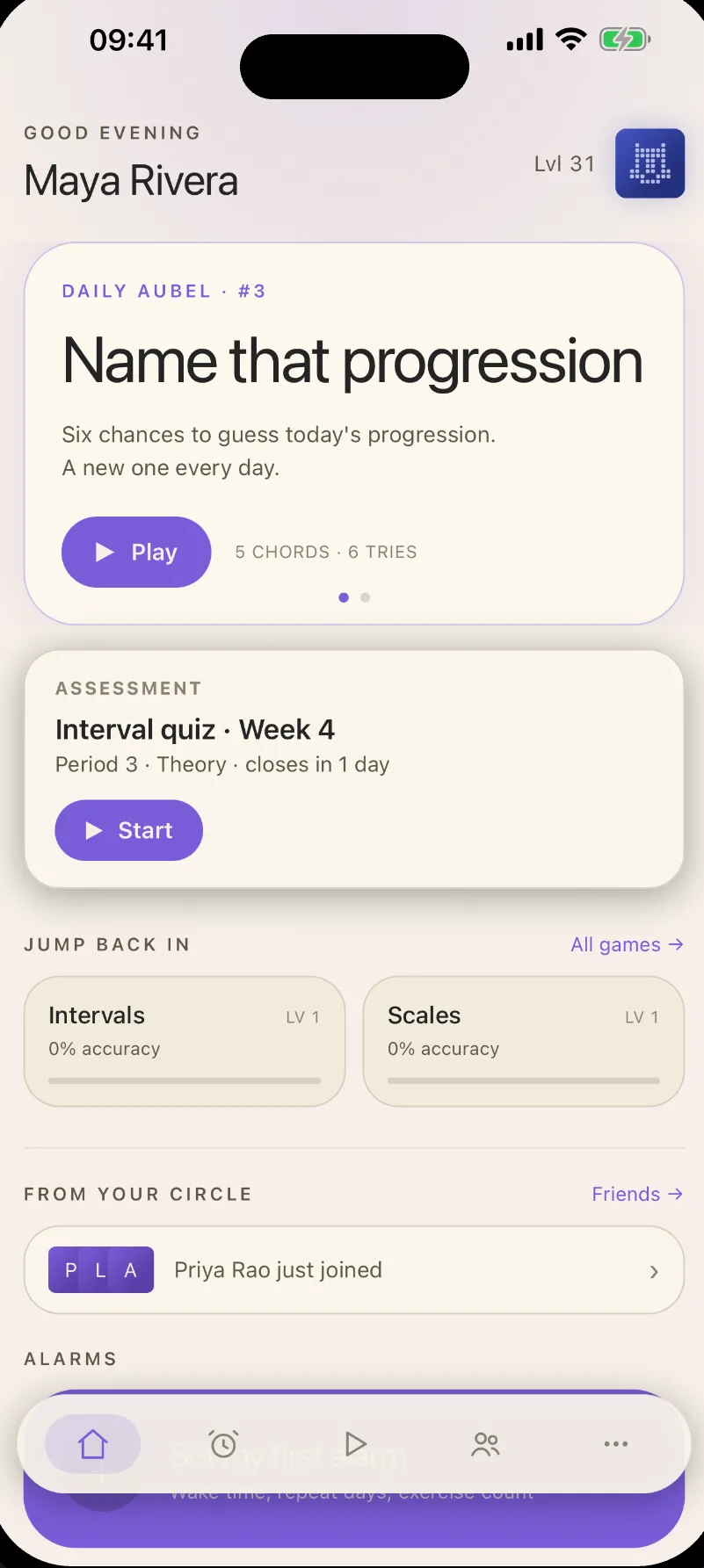
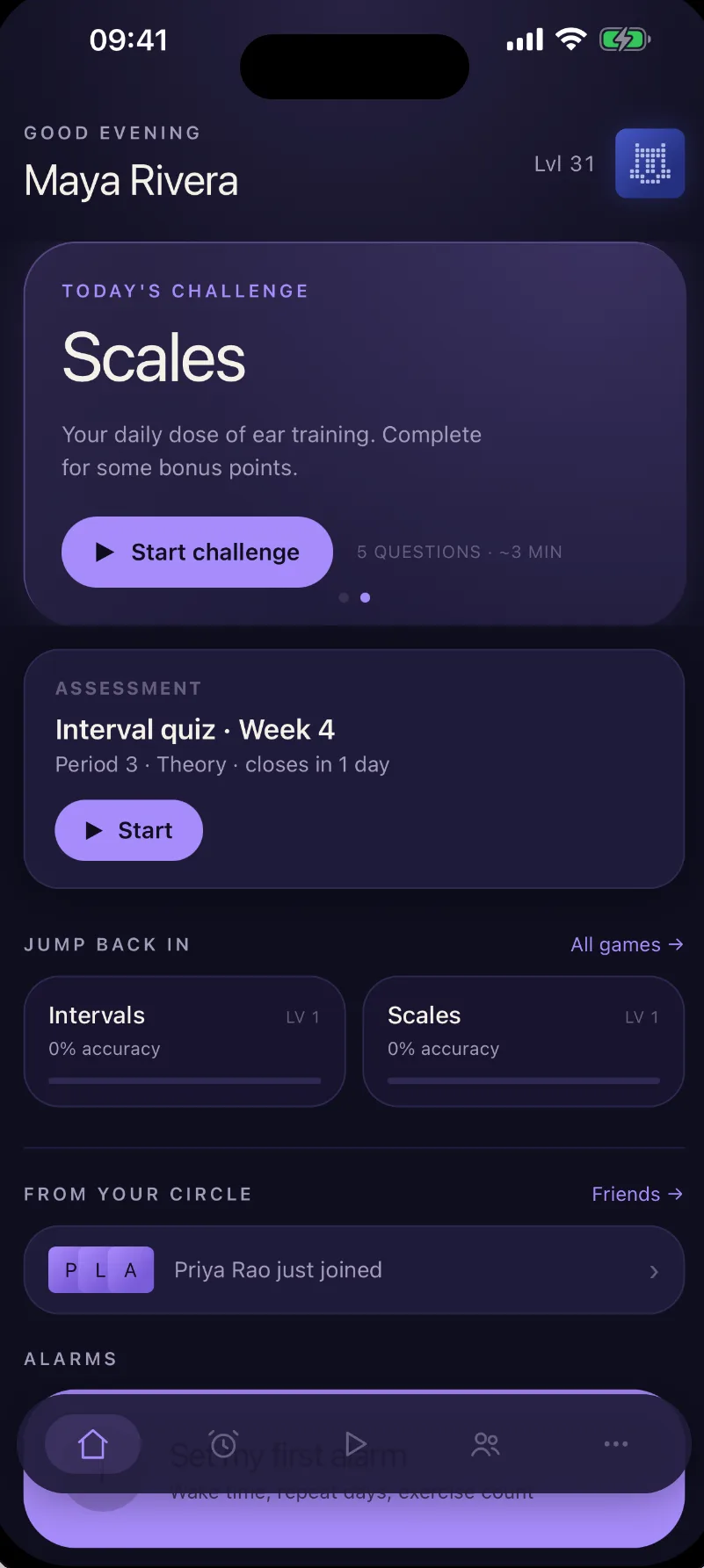
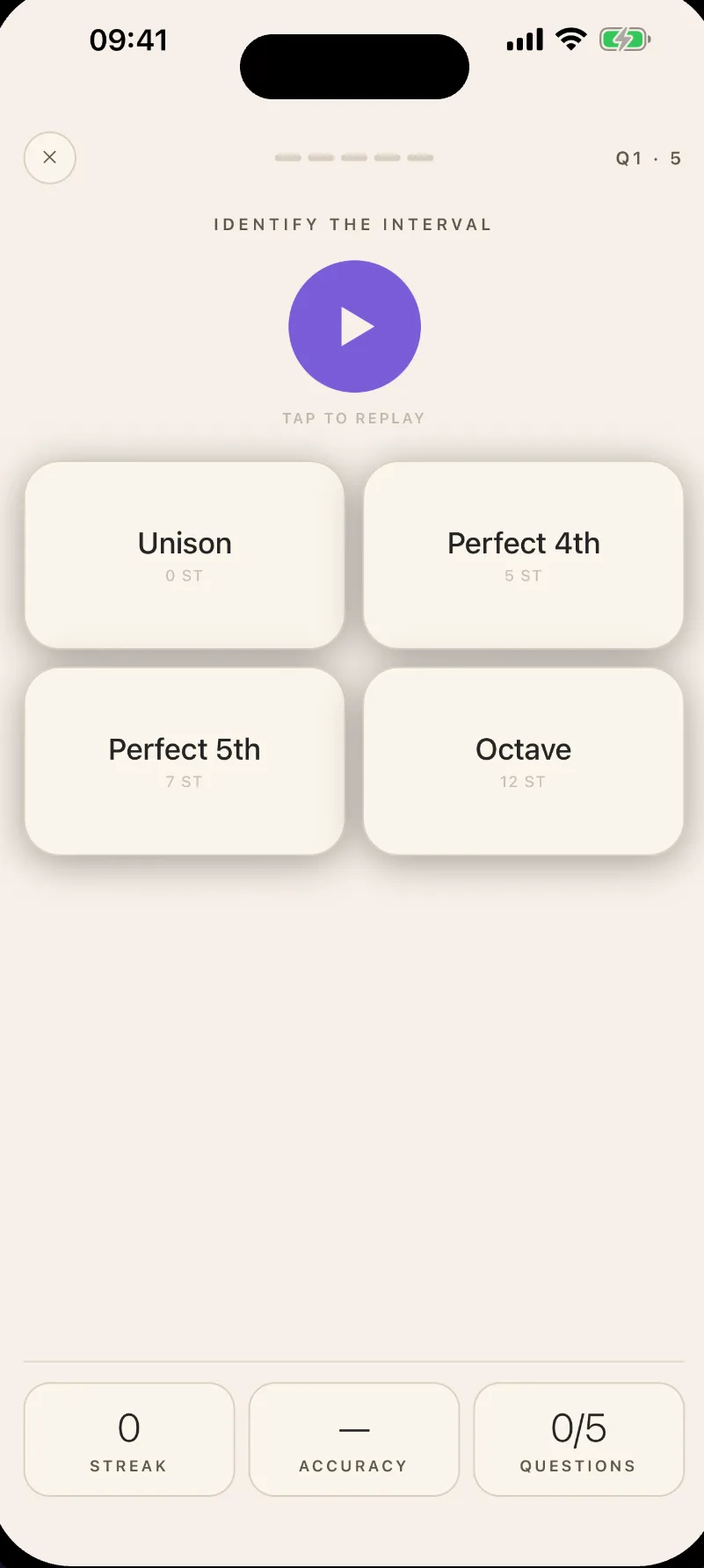
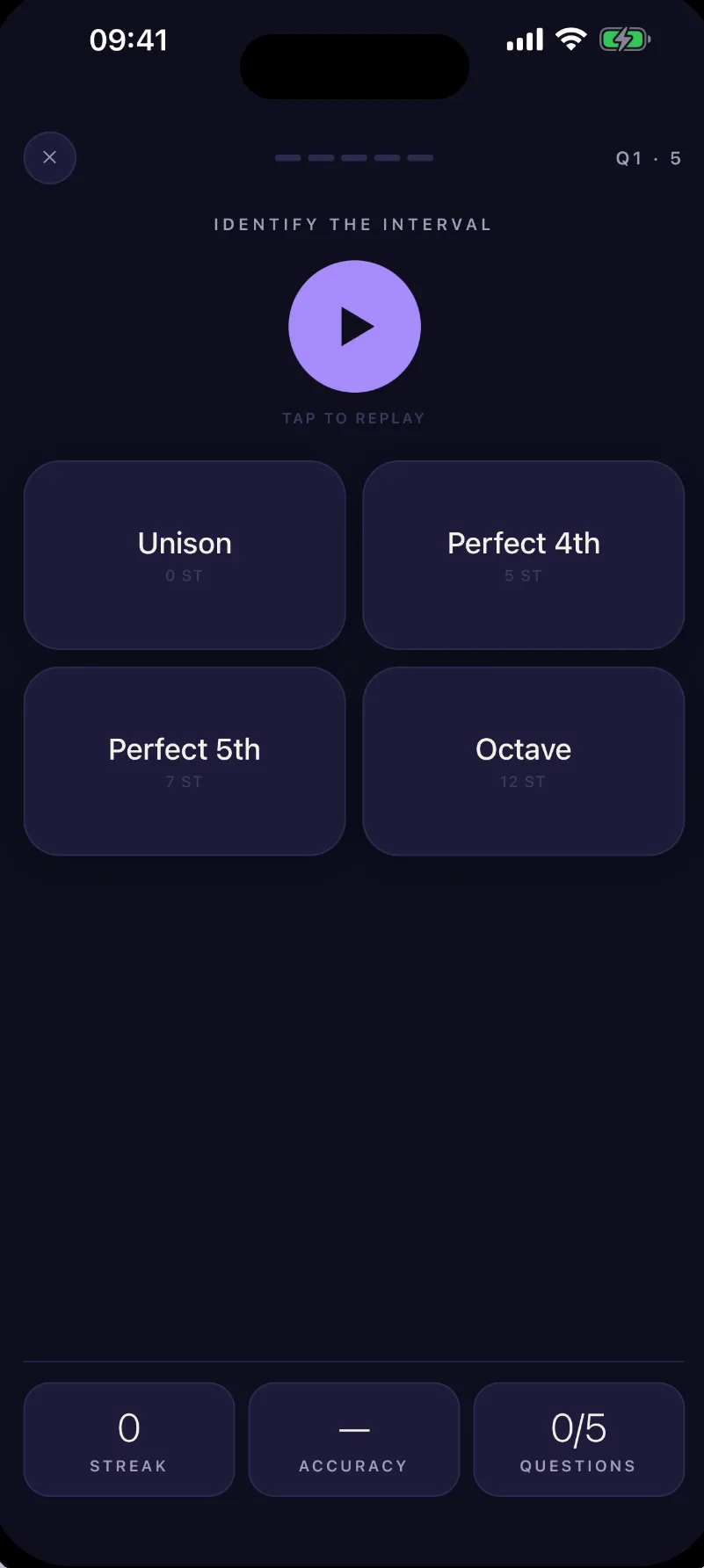
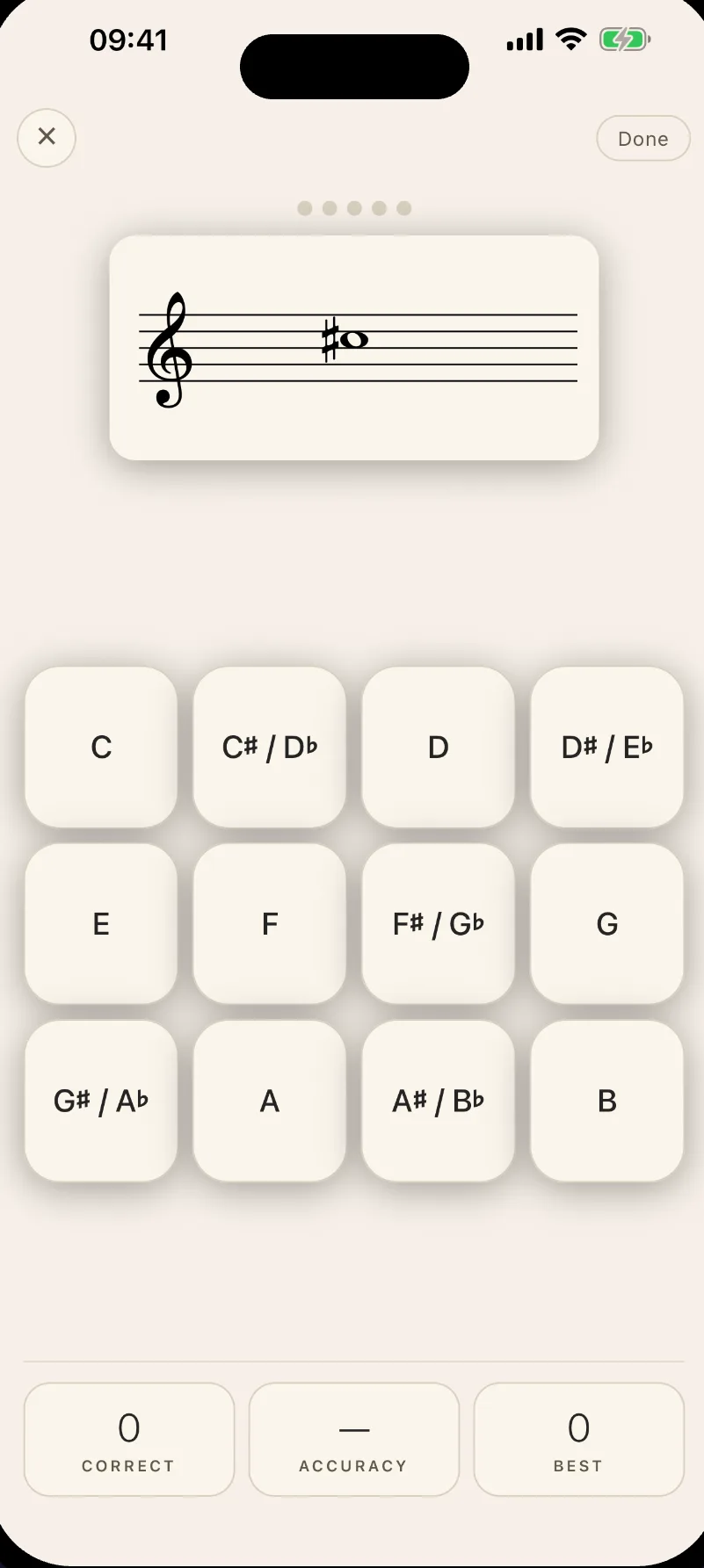
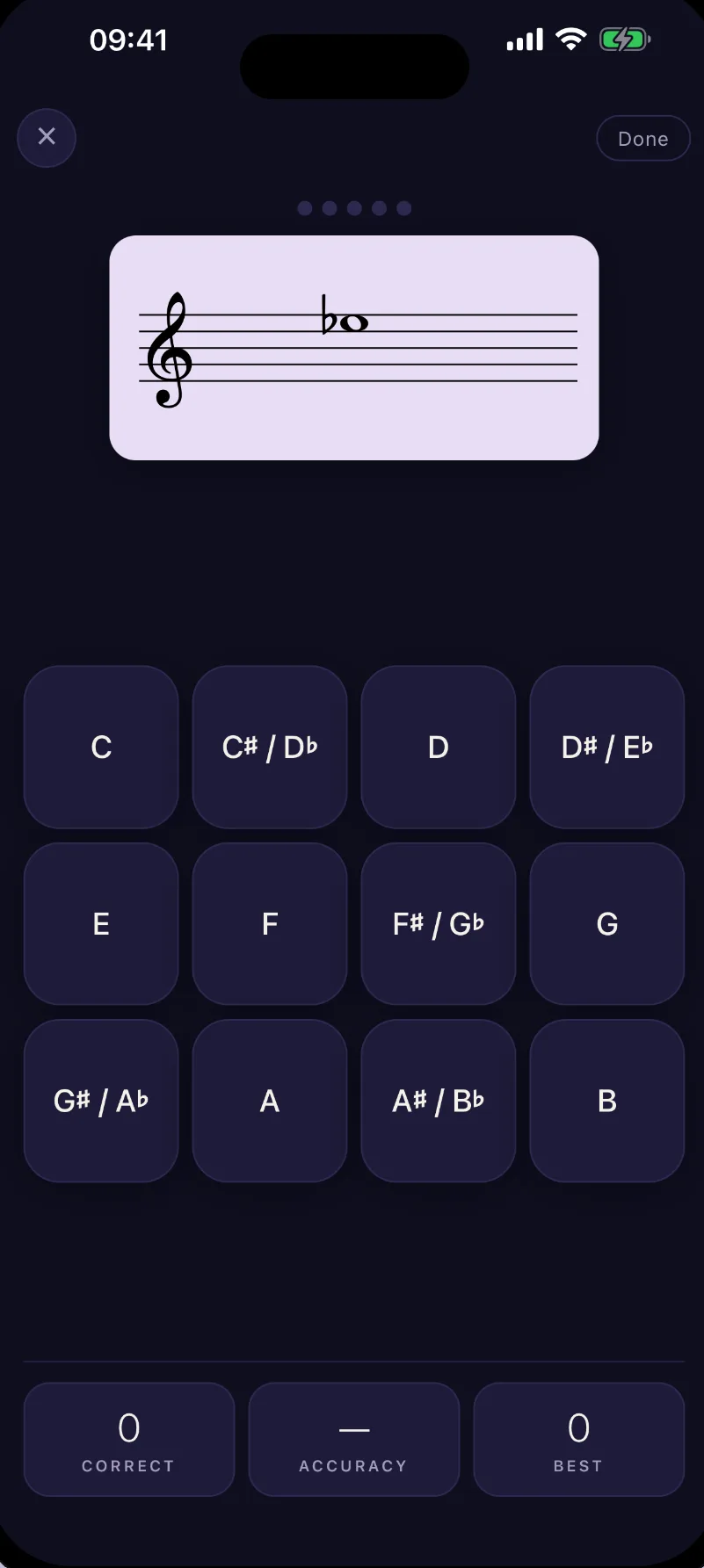
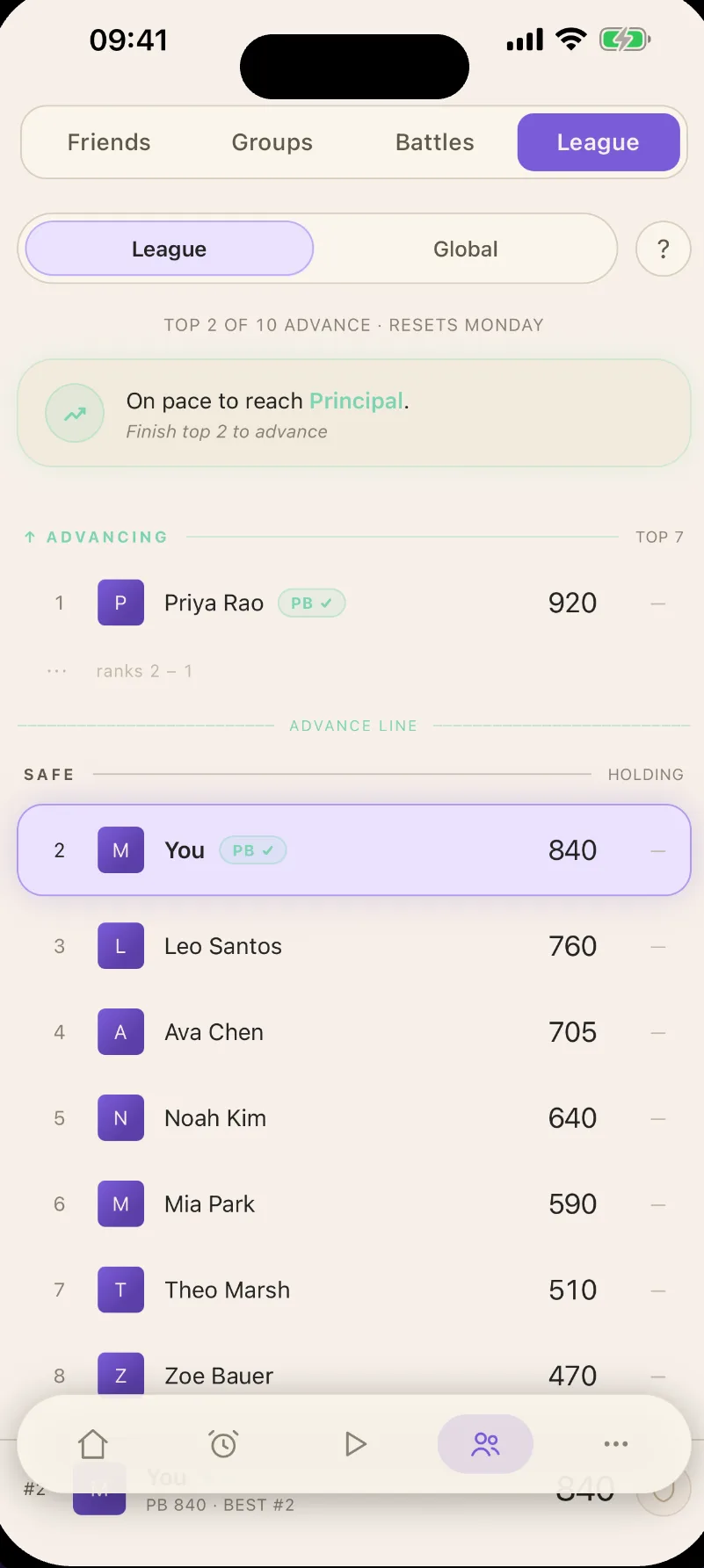
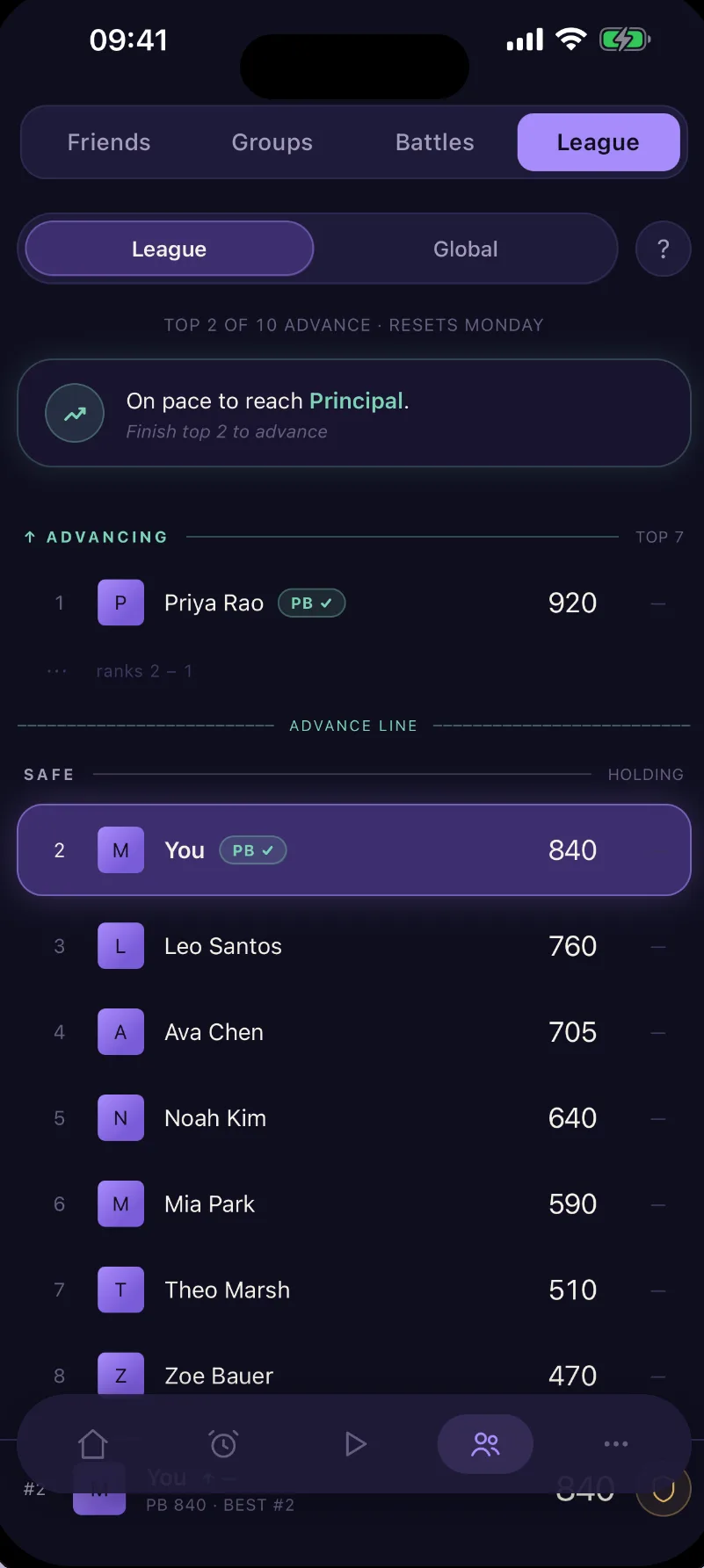
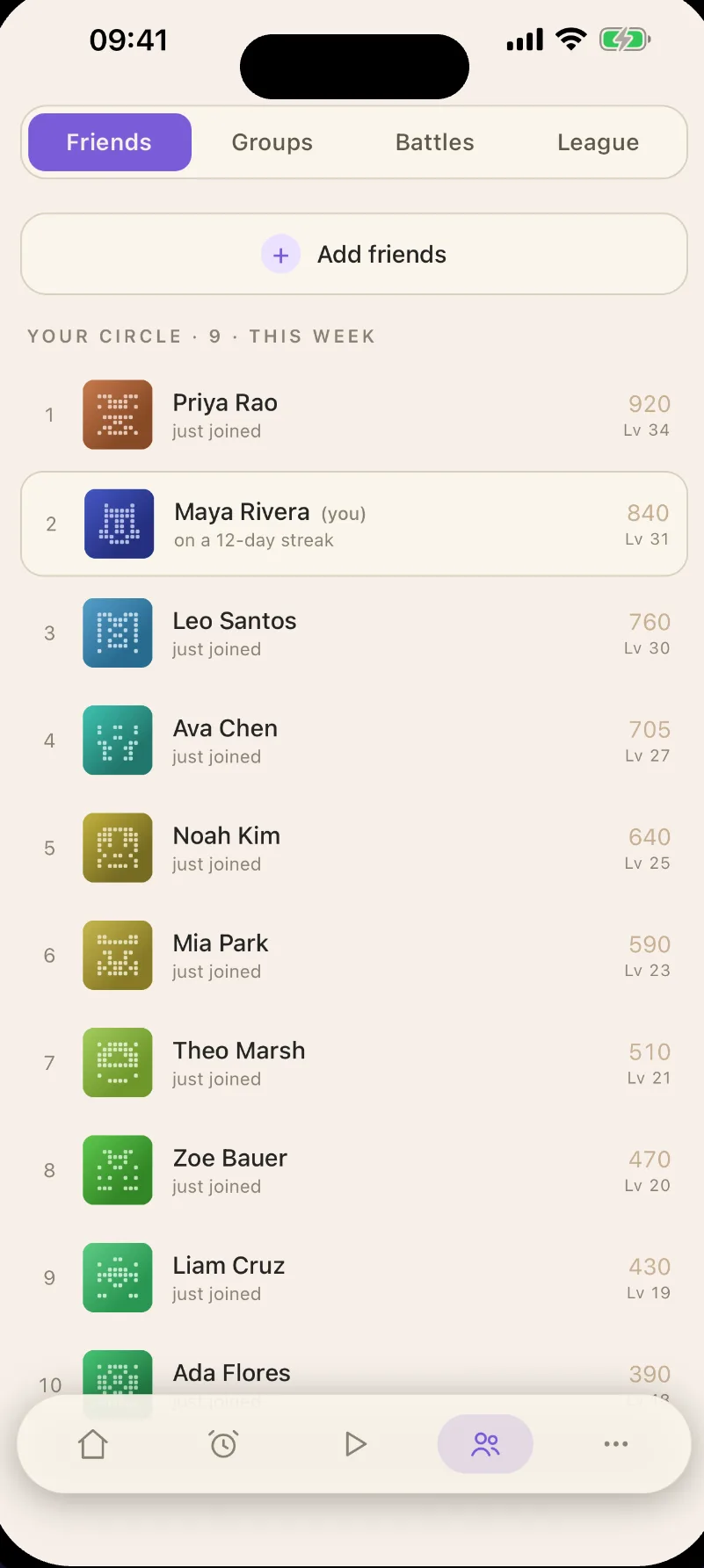
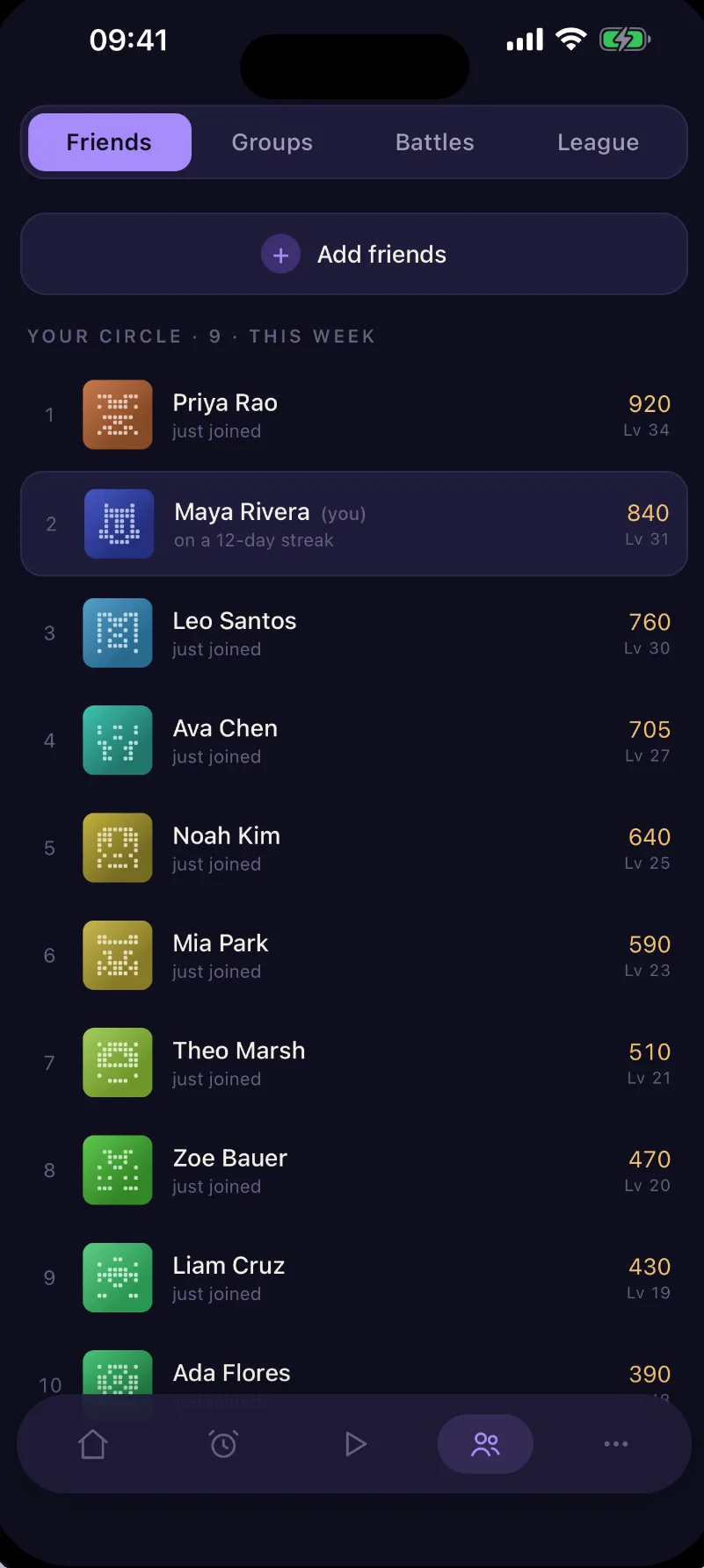
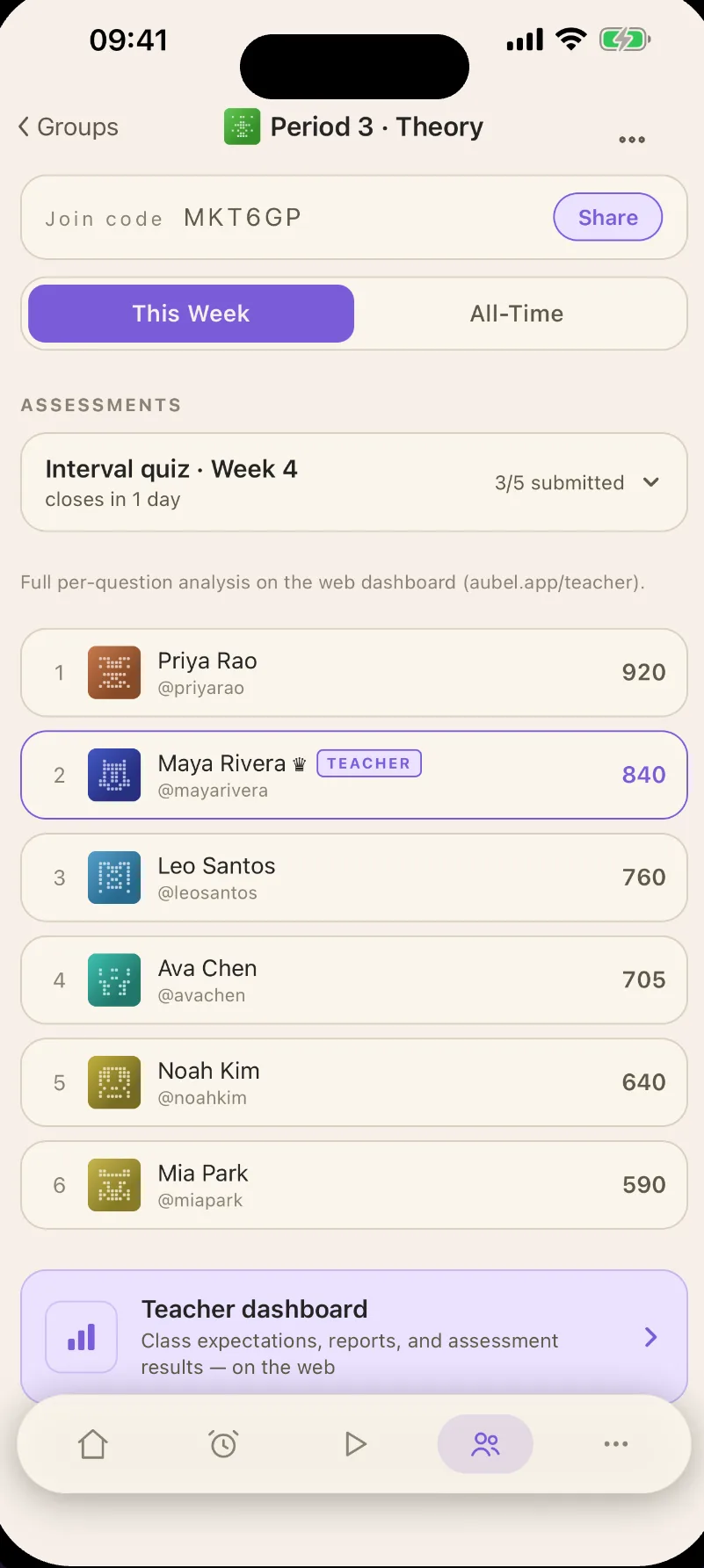
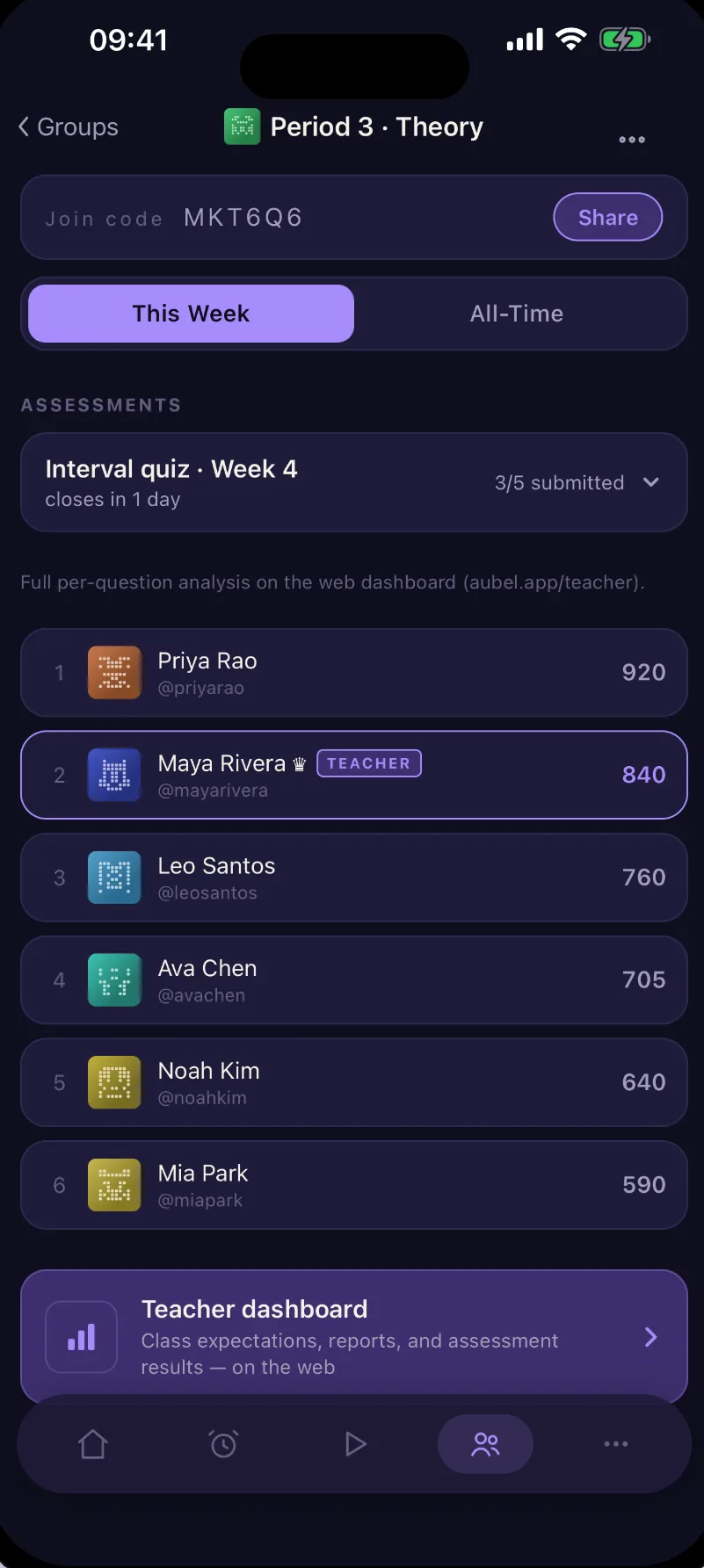
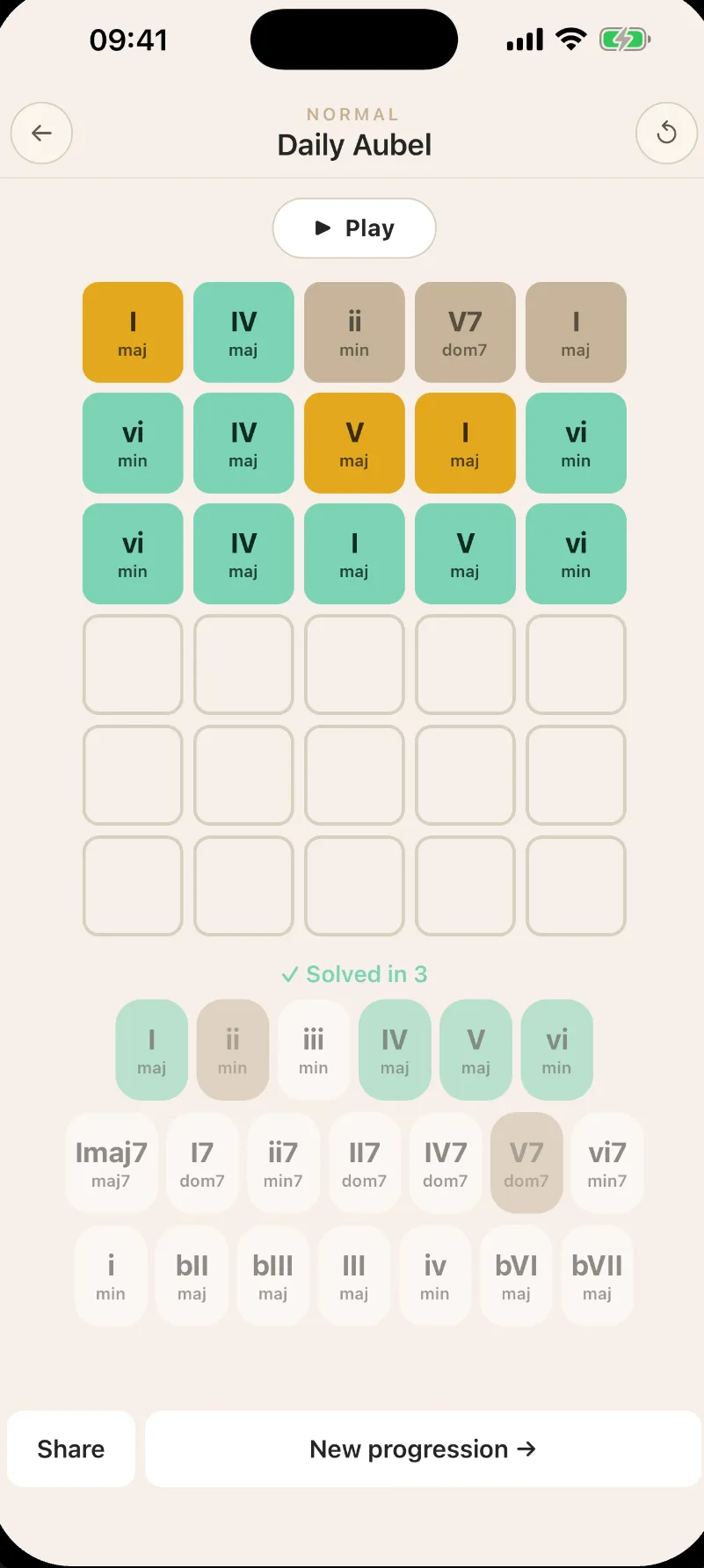
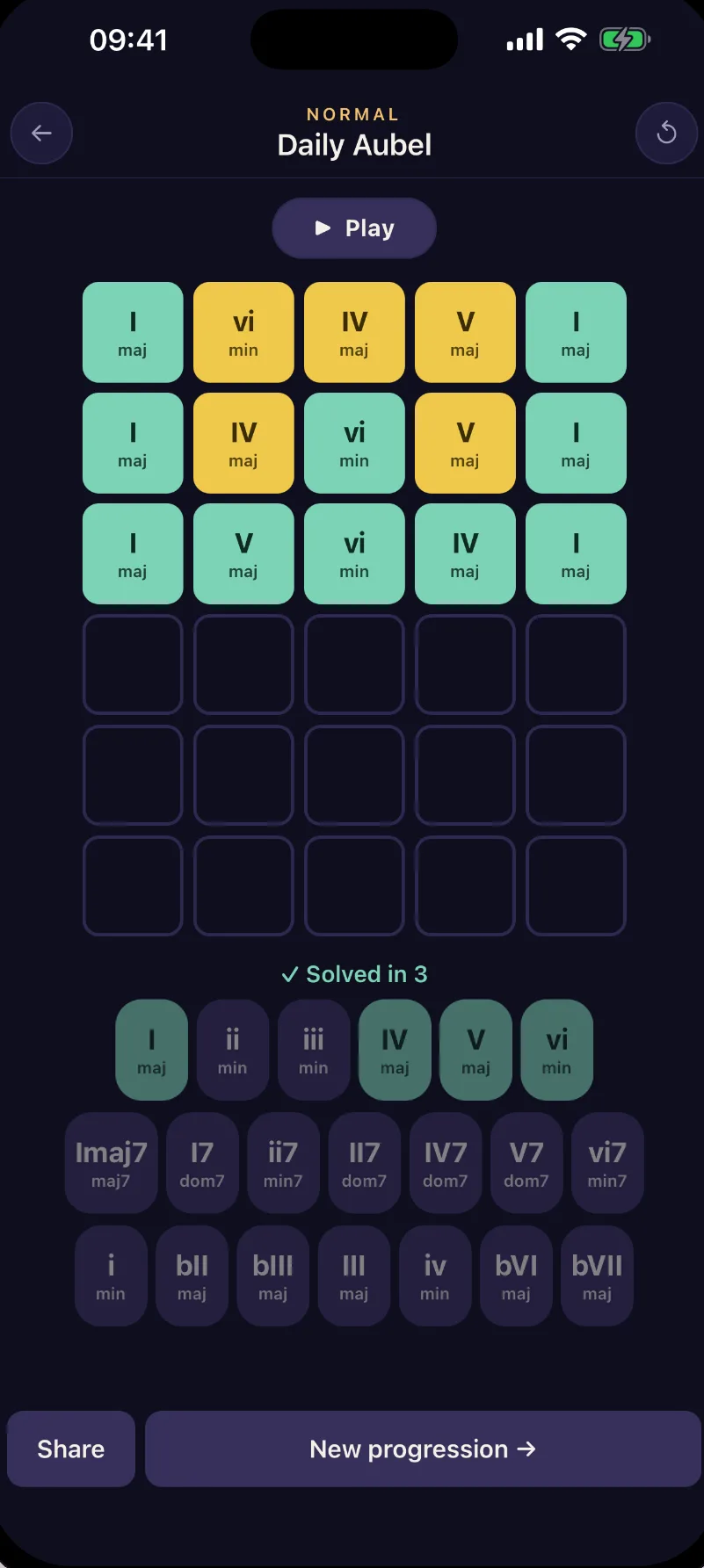
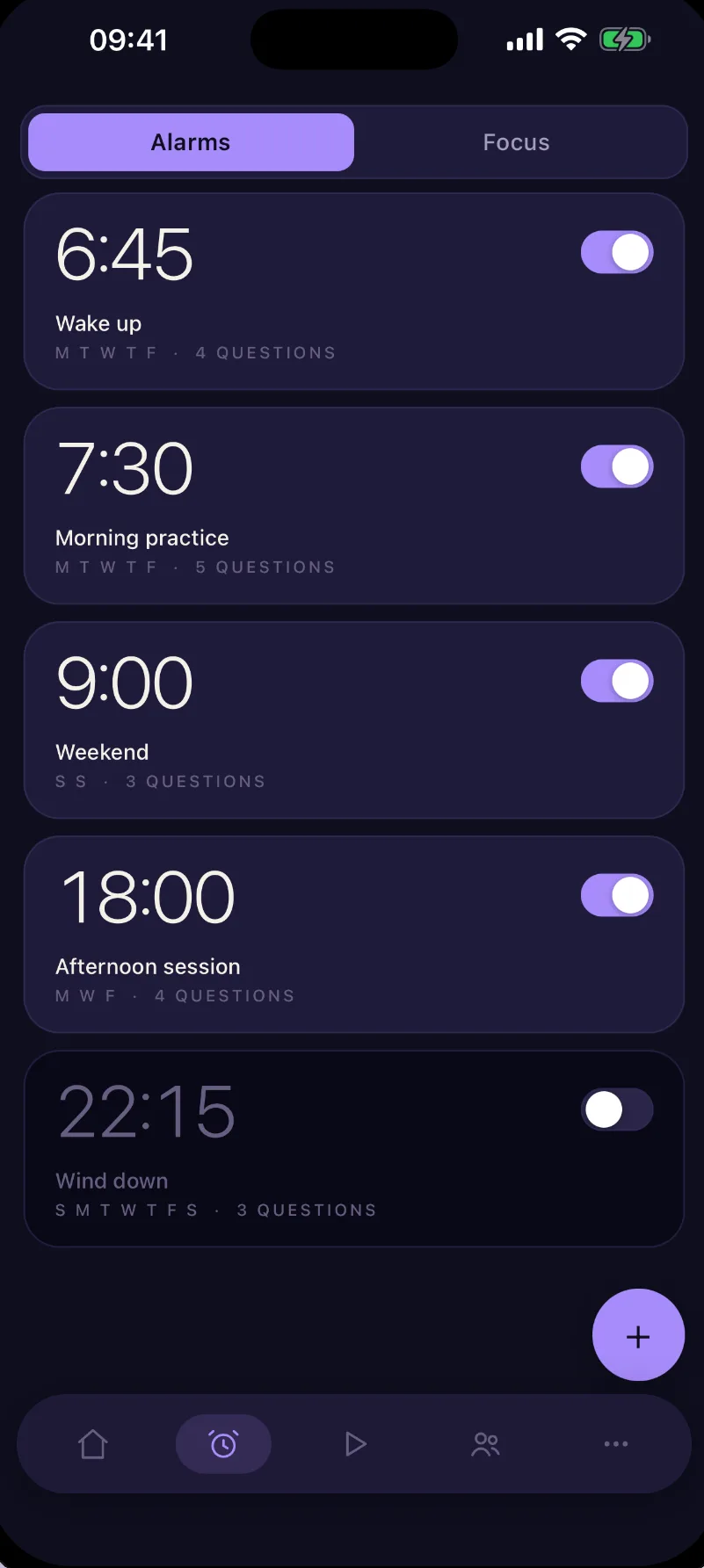
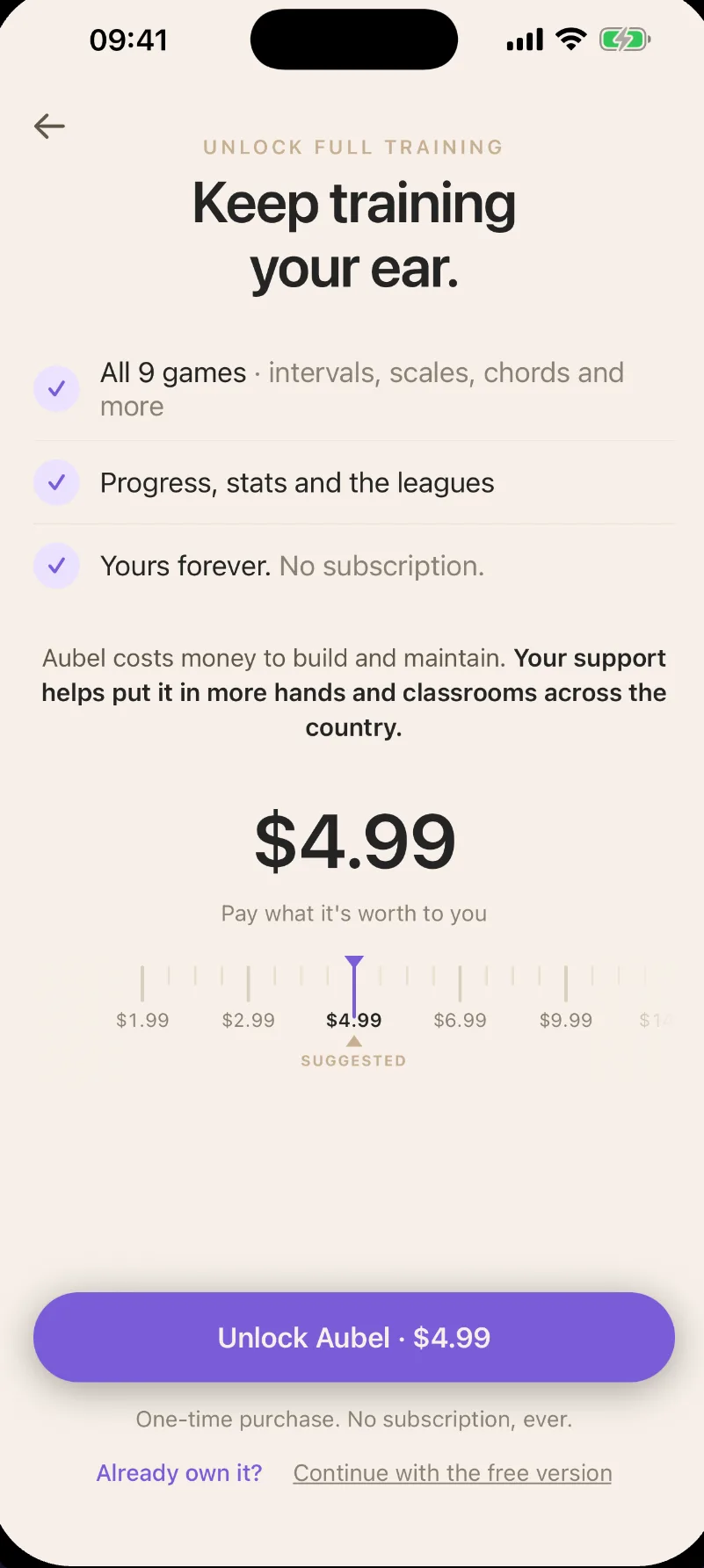
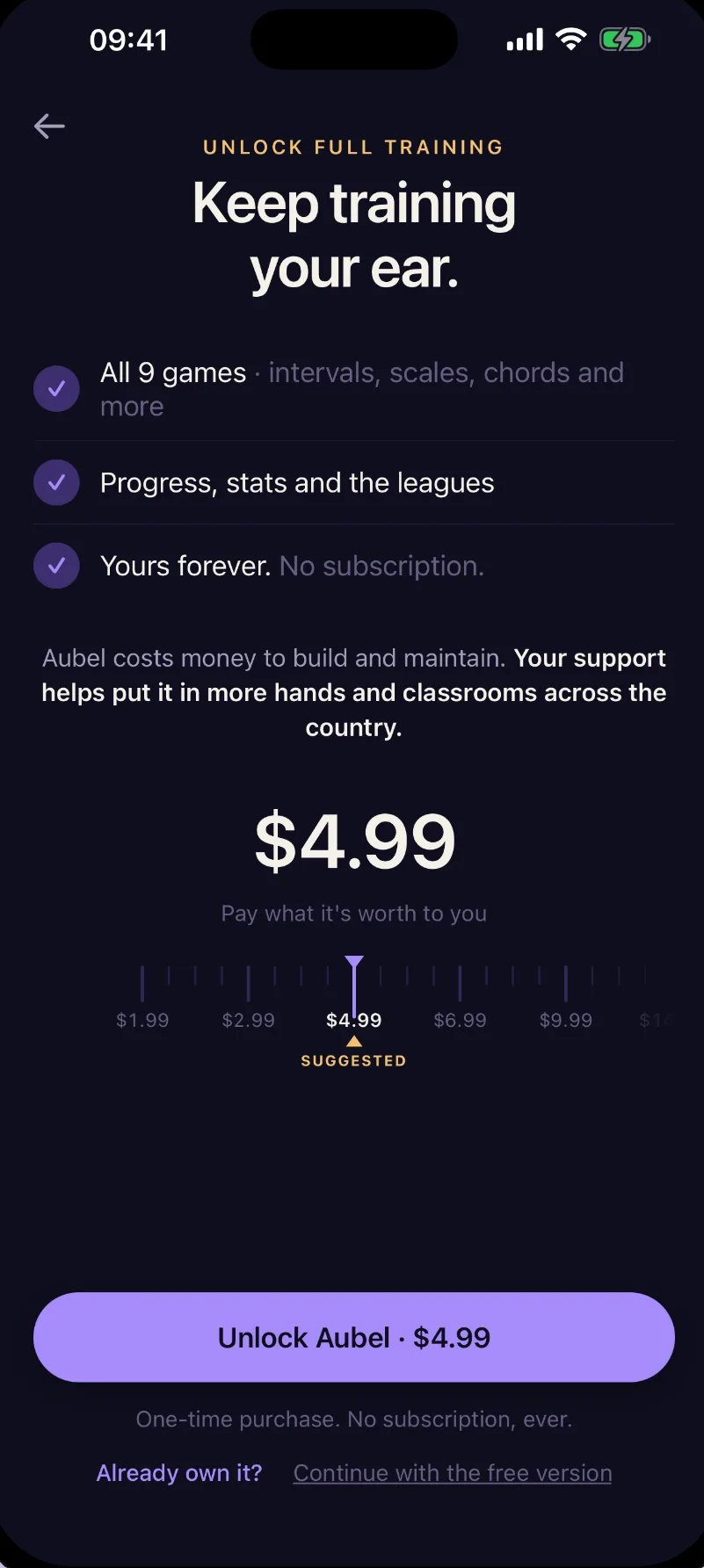
Weekly leagues, a global leaderboard, friend challenges, and one daily progression.
You're sorted in with players at your own level. Climb into the next tier by the end of the week, or slip to the one below. Then it resets and you go again.
One board, everyone who plays on it. See exactly where your ear stands against the whole app.
Challenge a friend to the same set of questions, answer whenever you like, and see whose ear is sharper.
One chord progression, the same for everyone, every day. Guess it by ear, Wordle-style, one position at a time.
Begin where you are
Practice personally on iPhone, begin immediately on the web, or bring Aubel into the classroom.